I’ve been running SEO content for this site for over a year. And if I’m honest with you — the way I do it now looks nothing like what I was doing 12 months ago.
A year ago, my process looked like this: open Semrush, export keyword data, open a Google Doc, paste in the numbers, switch tabs to check the SERP, write a brief manually, hand it to a writer, wait, edit, optimize, publish.
That process took 8 hours minimum per post. Often more.
What I run now is different. It’s what I call an agentic SEO workflow — a pipeline where Claude Code orchestrates a team of four AI specialists, each calling live Semrush data directly through the API, with two human approval gates before a single word gets published.
The whole thing runs in under 30 minutes of my time.
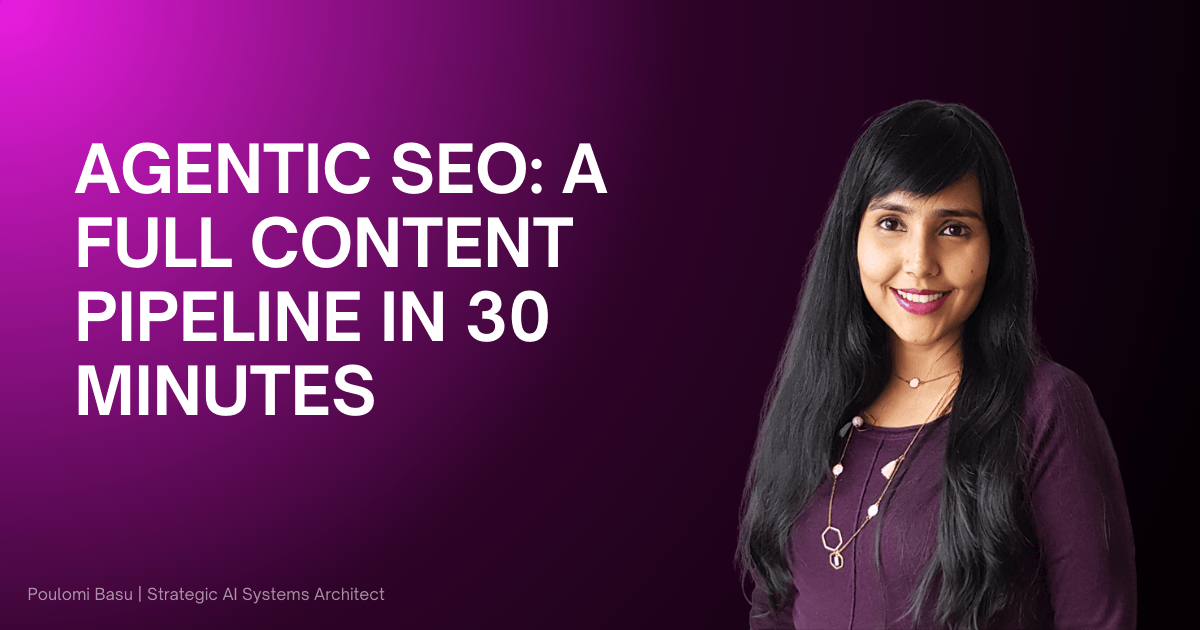
This article walks through the exact workflow. What each phase does, what tools each agent calls, and — critically — how Semrush One’s AI Visibility toolkit closes the loop that makes the whole system actually trustworthy.
This is the workflow I built for my own business. I’m sharing it because I think it shows something most founders don’t see yet: what SEO looks like when it runs at Level 5 instead of Level 1.
What “Agentic SEO” Actually Means
Before I walk through the pipeline, let me explain what I mean by agentic — because it’s not just a buzzword.
Most people doing SEO are running a Level 1 operation. They’re using AI the same way they’d use Google: ask a question, get an answer, move on. The AI is a lookup tool. A slightly smarter search bar.
Agentic SEO is something else entirely.
An agent doesn’t just answer questions. It takes a goal, breaks it into tasks, decides which tools to call in what order, handles the outputs, and passes results to the next step — without you coordinating every move. You give it a destination. It figures out the route.
The Level 1 workflow (what most founders run)
Here’s what a typical SEO content process looks like at Level 1:
- Open Semrush, manually search a keyword
- Export results to a spreadsheet
- Check the SERP in a separate tab
- Write a content brief in a Google Doc
- Find competitor articles by hand, read them, take notes
- Brief a writer (or write it yourself)
- Edit the draft for SEO — keyword placement, headings, meta
- Format for WordPress
- Publish
That’s 8–12 hours per post. For one article. And most of that time is coordination and data-wrangling — not actual thinking.
The Level 5 agentic SEO workflow
Here’s what the same process looks like when you run it as an agentic workflow at Level 5:
- I give Claude Code a topic and an angle
- A Keyword & Research Specialist agent calls the Semrush API directly — live volume, KD, CPC, trend, SERP features, related cluster
- A Content Strategist agent reads the keyword data, the site sitemap, the offers reference, and the content pillars — simultaneously — and builds a complete brief with internal link plan and source list
- I review and approve the brief (Gate 1 — takes me 10 minutes)
- An SEO Writer agent builds the full post in WordPress-ready HTML from the approved brief
- A Quality Specialist agent runs three rounds of brand voice and SEO checks — I never see a failing draft
- Final post, metadata, featured image: delivered
That’s under 30 minutes of my time. The rest is the pipeline.
Think about it: the difference between these two workflows isn’t just speed. It’s consistency. Every post goes through the same research process, the same quality gate, the same brand voice check — whether it’s post 3 or post 50. That’s what a system does that a process can’t.
Why the gap is larger than it looks
Here’s the thing most founders miss when they first hear about this: it’s not just the 8 hours saved per post.
It’s the compounding effect.
If you publish one post a week manually, that’s 8 hours of your time — every week. If a competitor is running an agentic pipeline, they can publish three posts in the same time window, with better keyword targeting, consistent brand voice, and AI-optimised formatting baked in from the start.
That’s the gap I’m talking about. And it widens every month.
The 6-Phase Pipeline — Step by Step
Let me walk you through how the pipeline actually runs. This isn’t hypothetical — this is the exact workflow I use to produce content for this site.
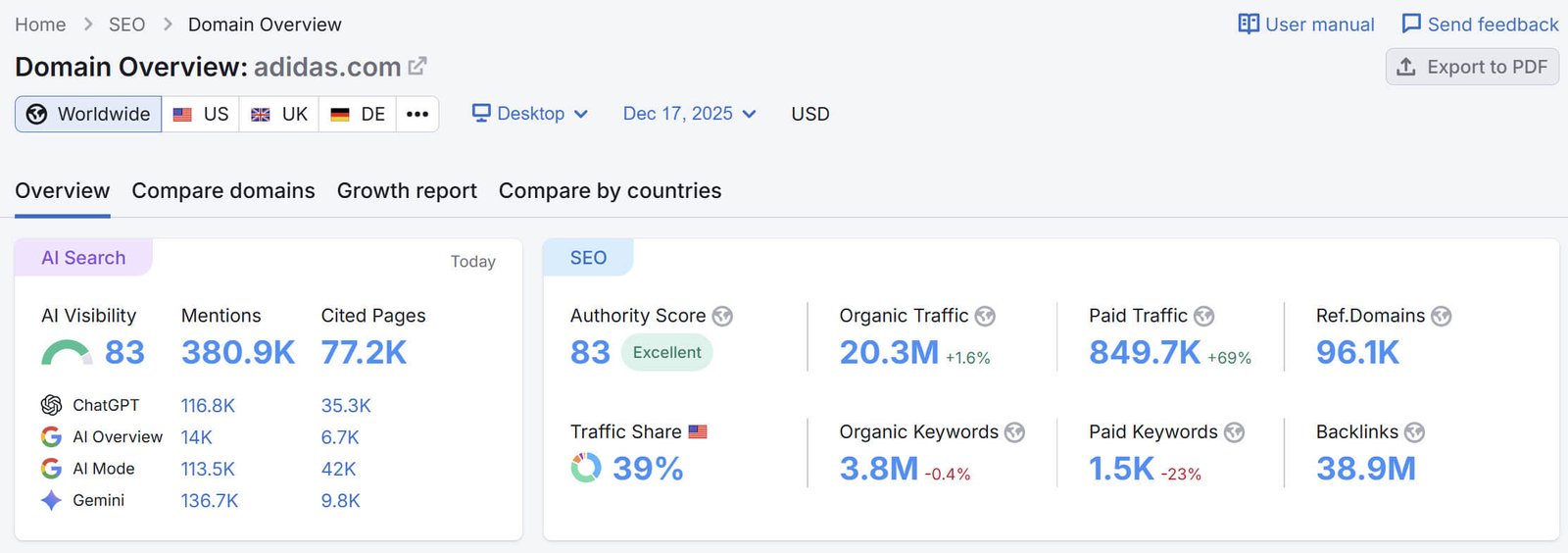
Phase 1: Live keyword research via the Semrush API
The first agent to run is the Keyword & Research Specialist. I give it a topic or a keyword cluster. It does the rest.
Here’s what it calls:
- Semrush Keyword Magic Tool — pulls volume, keyword difficulty, CPC, and trend data for the primary keyword and up to 20 related terms
- Semrush Keyword Gap — identifies related keywords with the strongest ranking opportunities
- Semrush Organic Research / SERP analysis — returns the top 10 ranking pages, estimated traffic, and SERP features (featured snippets, People Also Ask boxes)
All of this happens through Python scripts that call the Semrush API directly. No manual exports. No tab switching.
The agent applies decision rules to the data: keyword difficulty under 30 is ideal, under 50 is viable, anything over 50 triggers an automatic pivot to long-tail variants. Volume sweet spot is 100–1,000 monthly searches for a site at our domain authority level.
It outputs a GO / PIVOT / SKIP decision with the full data behind it.
Phase 2: Content strategy and brief building
While the keyword research is running, the Content Strategist agent is already loading context: the site sitemap, the offers reference file, the content pillars document, and the internal link skill.
Once keyword data arrives, the Strategist builds the complete content brief:
- H1, all H2s, all H3s — with a one-sentence description of what each section covers
- 5–8 external sources with URL, key insight, and which section they support
- 3–5 internal links scored on a 7-point rubric (topic relevance + audience fit + buyer journey alignment) — minimum score of 4 to qualify
- Offer selection with exact CTA language matched to the buyer journey stage (TOFU / MOFU / BOFU)
- FAQ questions sourced from People Also Ask data and related search clusters
This brief is what gets presented to me at Gate 1. Nothing gets written without my sign-off on the structure and direction.
Phase 3: Gate 1 — human approval
This is where I step in. Gate 1 is the most important checkpoint in the pipeline.
I review the keyword strategy, the full outline, the source plan, the internal link plan, and the offer selection. I can change the angle, restructure sections, swap out the CTA, or reject the keyword entirely and ask for a pivot.
This takes me 10 minutes on average. Sometimes 5. Rarely more than 15.
After Gate 1 approval, the writer gets the brief. Before it, nothing moves.
Phase 4: Writing in WordPress-ready HTML
The SEO Writer agent builds the full post from the approved brief. The output is WordPress-ready HTML — not markdown, not a Google Doc, not a draft that needs reformatting.
The writer is operating from three reference files simultaneously:
- Brand voice reference — Poulomi’s phrases, tone principles, what pushes Marcus away
- Negative keywords list — 40+ banned words and phrases that signal AI-generated writing
- Content guidelines — structure rules, 80/20 value ratio, sentence pattern restrictions
The post includes answer blocks at the start of each H2 section (40–60 words, directly answering the heading question — optimized for AI extraction), a full FAQ section with direct answers first, and all affiliate links placed naturally across the body with descriptive anchor text.
For affiliate posts, the writer also embeds product screenshots pulled from existing articles on the site. That’s what you’re seeing in this post — the Semrush images I’m using here were extracted from the Semrush One review automatically.
Phase 5: QA, optimization, and the feedback loop
This is the phase most people skip when they run AI content. It’s the one that matters most.
The Quality & Optimization Specialist runs every draft through a 5-point check — up to three rounds — before it reaches me:
- Banned words/phrases — a single match against the negative keywords list is an automatic fail
- Brand voice — tone, signature phrases, no hype, no fear
- Audience alignment — does this speak to Marcus the way he needs to hear it?
- Content guidelines — 80/20 rule, buyer journey consistency, CTA matches offer tier
- Sentence patterns — no formulaic structures, no AI-detectable phrasing
If Round 1 fails, only the failing sections get rewritten — never the whole post. Round 2 checks those sections again. Round 3 is the final attempt.
I never see a failing draft. What reaches Gate 2 has already passed three rounds of quality validation.
After the quality gate, SEO optimization runs: keyword placement audit, heading hierarchy check, meta title and description, schema markup (Article + FAQ JSON-LD), image alt text suggestions.
The real question is: how many AI-generated posts are you publishing right now that haven’t been through a single quality gate? The writing might be fine. The trust problem usually lives downstream, in what happens after the first draft.
Phase 6: Final delivery
Gate 2 is the final human checkpoint. I review the complete optimized post, the meta assets, the featured image, and the optimization report before anything goes near WordPress.
The delivery package includes:
post.html— complete WordPress-ready post bodymetadata.json— structured SEO data (meta title, description, slug, schema, alt text, internal links used)metadata.txt— plain-text version for direct WordPress paste-in- Featured image — generated from a Canva template via API, saved as a PNG in the post folder
After Gate 2 approval, it’s a copy-paste into WordPress. That’s it.
The Semrush MCP Integration — How Live Data Actually Flows In
Here’s something worth understanding about why this pipeline runs the way it does.
The keyword research, SERP analysis, and competitive intelligence in this system aren’t coming from manual exports or copy-pasted screenshots. They’re coming from direct API calls to Semrush — through what’s called an MCP (Model Context Protocol) integration.
What the Semrush MCP connection does
MCP is a protocol that lets AI agents call external tools and services directly, in real time. The Semrush MCP connector means Claude Code can call Semrush’s data layer the same way a developer would call an API — structured input, structured output, no human in the middle.
This is what makes the 30-minute timeline possible. The agents aren’t waiting for you to export a CSV and paste it in. They’re pulling live data, processing it, making decisions on it, and passing it downstream — all within the same workflow run.
The three Semrush tools the pipeline calls directly
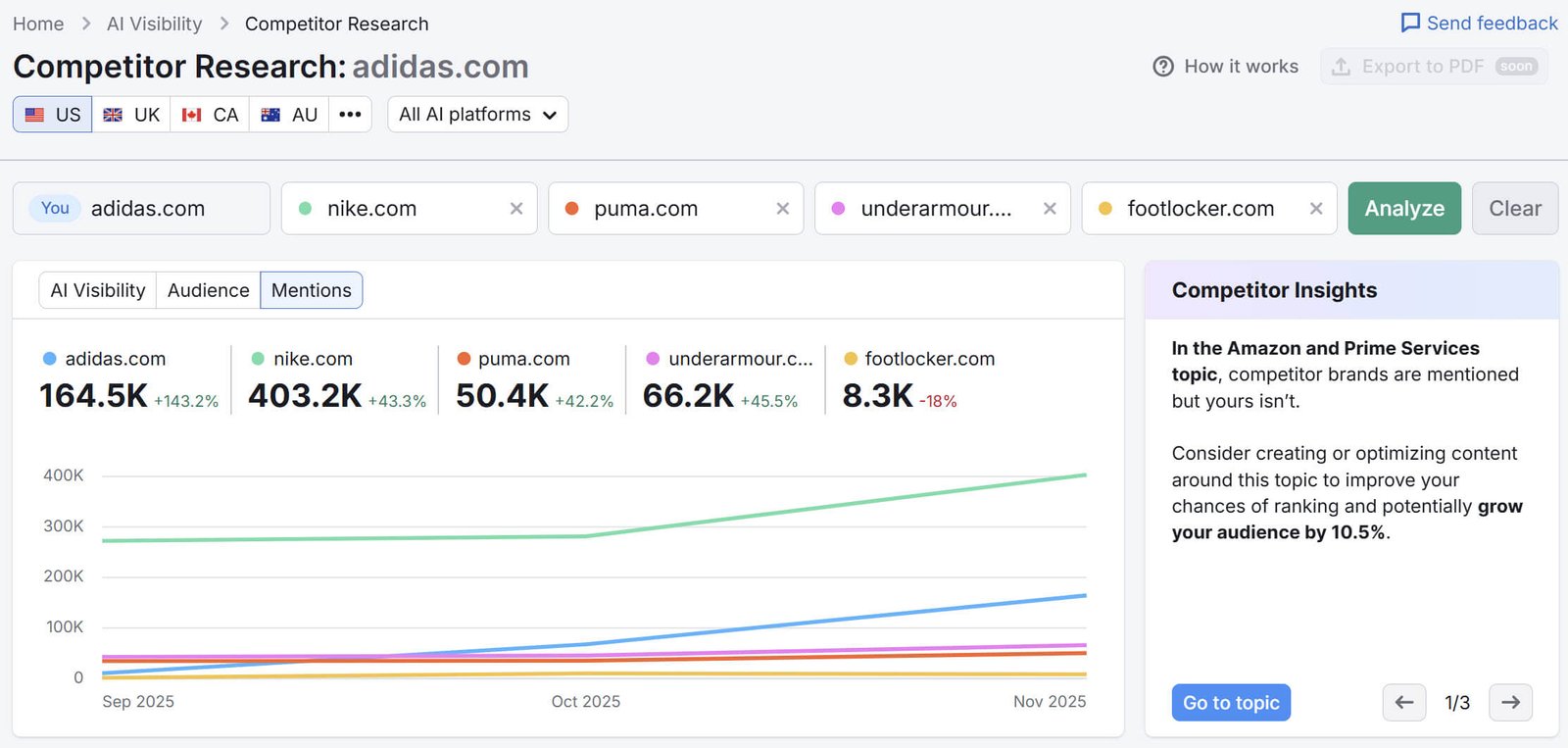
- Keyword Magic Tool — volume, difficulty, CPC, trend for the primary keyword and the semantic cluster
- Keyword Gap analysis — finds the ranking opportunities most relevant to your positioning
- Organic Research / SERP analysis — top 10 ranking pages, traffic estimates, SERP feature detection
Why this matters beyond the time saving
The data quality is higher when it flows directly from the source. When a human is exporting, copying, and reformatting data, errors creep in. Context gets lost. The keyword from column B gets paired with the difficulty score from column C by mistake.
When the agent calls the API directly, what goes into the brief is exactly what Semrush returned. No translation errors. No stale data.
The Semrush MCP integration is what turns a collection of AI tools into an actual pipeline. It’s the connective tissue.
If you want to explore what Semrush’s AI Visibility toolkit tracks — and how it connects to the MCP layer — the Semrush One Starter free trial is the place to start. It gives you 14 days to see the full AI search data layer before committing.
The AI Visibility Loop — Why Semrush One Is the Missing Piece
Here’s the problem I hit after building the first version of this pipeline.
I had the keyword research. I had the content structure. I had the quality gate. The posts were well-written, SEO-optimized, and formatted for AI extraction — answer blocks, FAQ sections, structured headings.
What I didn’t have was any way to know if it was working in AI search.
The black box problem in AI search
When someone asks ChatGPT or Perplexity a question in your niche, they get an AI-generated answer with citations. Your content might be one of those citations. Or it might not be — and you’d have no idea either way.
Google rankings you can track. Position monitoring, click-through rates, impressions — all measurable. But AI visibility? Until recently, it was a complete black box.
I was optimising my content for AI search without any feedback loop. Writing answer blocks, structuring FAQs for extraction, adding entity clarity — and publishing into the void.
What Semrush One’s AI Visibility toolkit actually tracks
This is where Semrush One changes the picture.
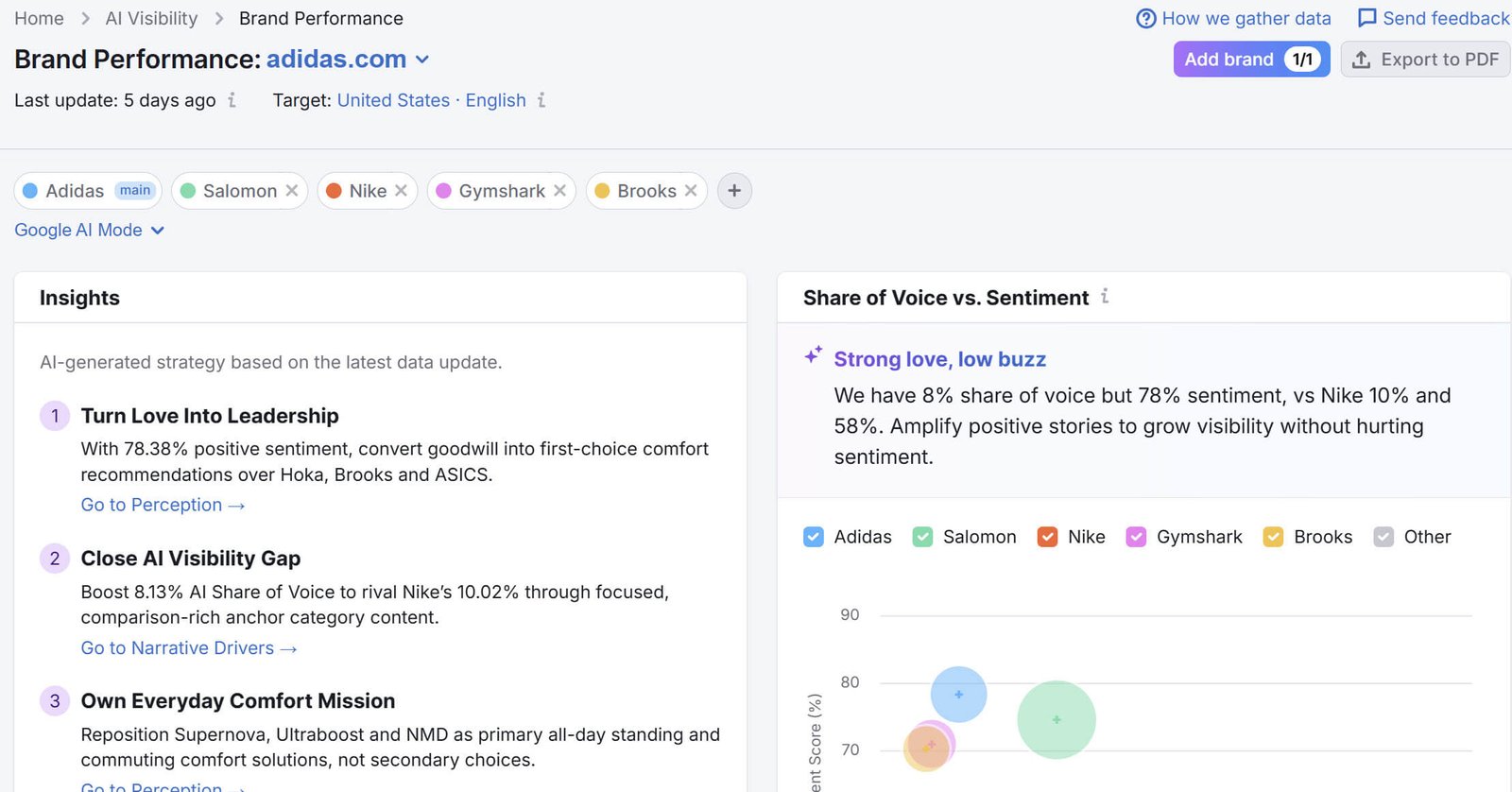
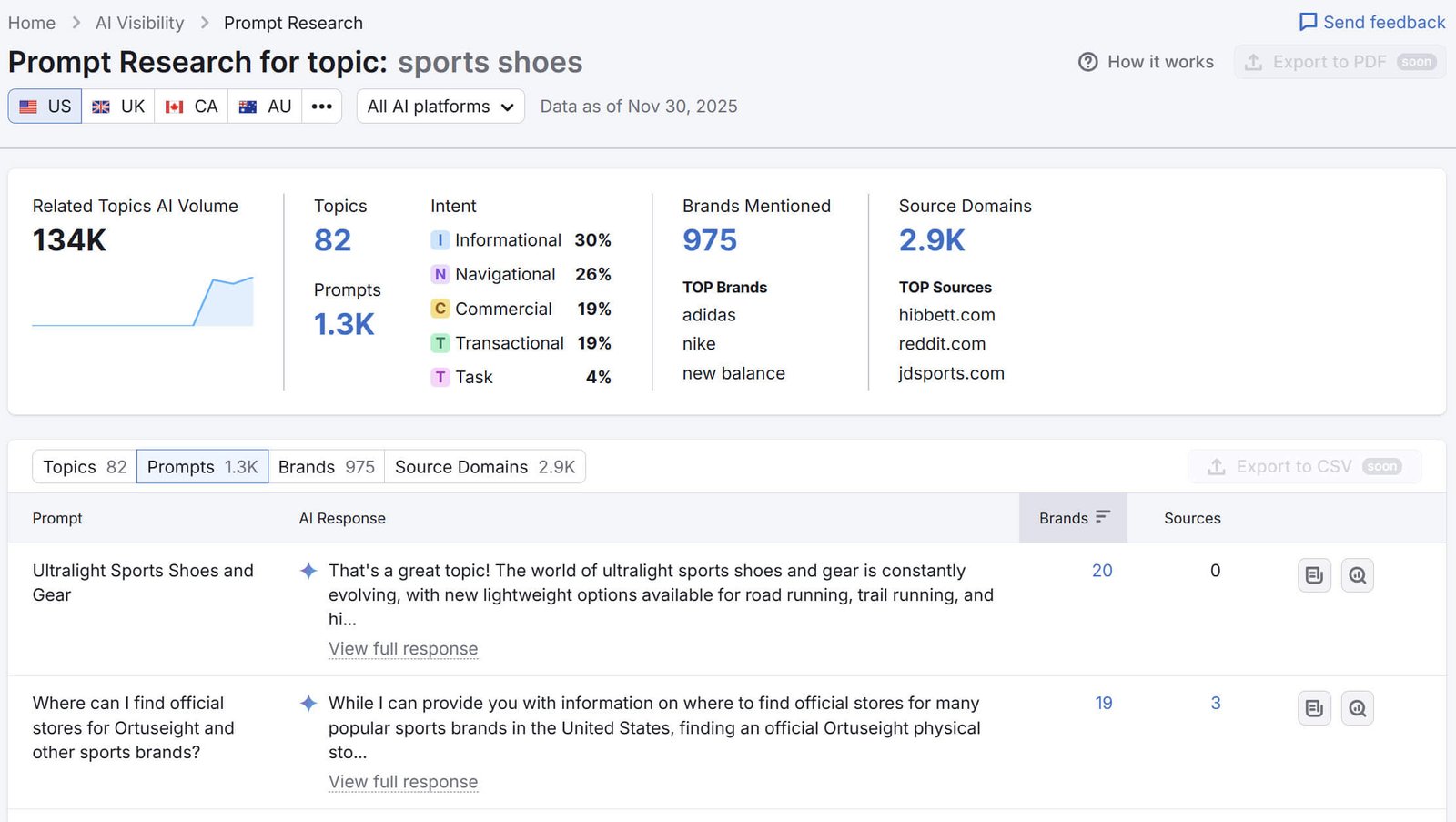
Semrush One’s AI Visibility toolkit monitors where your brand is appearing in AI-generated answers across ChatGPT, Perplexity, Gemini, and Copilot. Not Google. The AI engines that an increasing number of your potential clients are using to research solutions before they ever touch a search results page.
Here’s what it shows you:
- Which AI tools are citing your content — broken down by platform
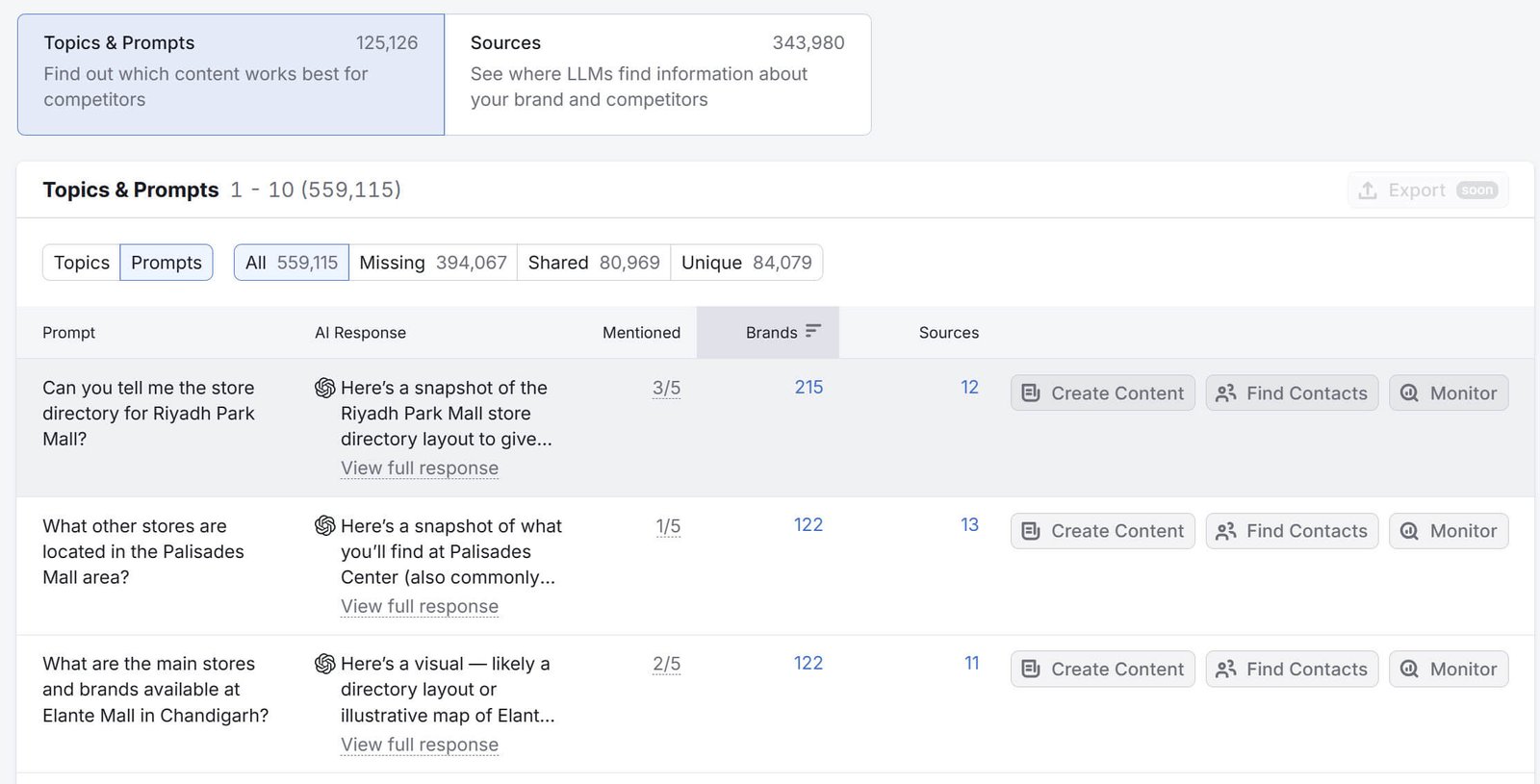
- Which topics and prompts you’re appearing for — the actual questions people are asking when your content surfaces
- How your AI visibility compares to competitors — are they getting cited more than you on your own keywords?
- Trend tracking — is your AI presence growing, holding, or slipping?
How the loop closes
When you pair the agentic SEO pipeline with Semrush One, you get a closed feedback loop that most content teams don’t have yet:
- Pipeline produces content optimized for AI search (answer blocks, FAQ extraction, entity clarity)
- Semrush One shows whether that content is actually being cited in AI-generated answers
- You see which topics are getting traction and which aren’t
- The next pipeline run adjusts — different angle, stronger answer blocks, more targeted FAQ structure
- Repeat
Without Semrush One, step 2 doesn’t exist. You’re publishing into a black box and hoping the optimisation is working.
With it, you can see exactly where you’re appearing — and where you’re not. That’s what turns a pipeline into a system that gets smarter over time.
You can see what Semrush One’s AI Visibility toolkit tracks — and compare it to the traditional Semrush plans — in this Semrush Pro vs Semrush One Starter breakdown.
The bigger picture
SEO used to mean Google rankings. Full stop. Track keywords, climb the results page, watch traffic grow.
That model isn’t dead — but it’s incomplete. An increasing share of research and discovery is happening inside AI-generated answers. Your potential clients are asking Perplexity what the best approach is to their problem. They’re asking ChatGPT to recommend a consultant.
If your content isn’t being cited in those answers, you’re invisible to a segment of your market that you can’t even see yet.
The Semrush One annual plan covers both sides of this — traditional SEO data and AI visibility tracking — in one place. For a service business trying to stay visible across both search environments, that’s the practical choice.
The WAT Framework — Why the Output Is Trustworthy
The most common question I get when I describe this pipeline is some version of: “But how do you know the AI output is any good?”
It’s a fair question. And the answer is the WAT framework — Workflows, Agents, Tools.
The three-layer architecture
Every agent in the pipeline operates inside a strict separation of concerns:
- Workflows — markdown SOPs that define exactly what to do and in what order. The Keyword Specialist knows to run `semrush_keyword.py` first, then `semrush_related.py`, then `semrush_serp.py`. It knows to apply the KD decision rules. It knows what format to output. All of that is in the workflow. The agent just follows it.
- Agents — Claude Code handles the reasoning and coordination. It reads the workflow, decides which tool to call next, handles failures, interprets results, and passes outputs to the next agent. It doesn’t execute API calls directly. It orchestrates.
- Tools — Python scripts that do the actual work. API calls, file operations, data transformations. Deterministic. Testable. Fast. A tool doesn’t make content decisions. It executes a task and returns a result.
When AI tries to handle every step itself — reasoning AND execution — accuracy drops fast. If each step is 90% accurate and you chain five of them together, you’re down to 59% success overall. Separating reasoning from execution is what keeps the pipeline reliable.
The 5-point quality gate
The quality gate is where trust gets built.
Before any draft reaches me, the Quality Specialist runs it through five checks against the brand reference files — brand voice, negative keywords, content guidelines, audience alignment, sentence patterns. Every check. Every section. Up to three rounds if needed.
Here’s what that looks like in practice:
- A single banned word from the negative keywords list is an automatic fail — rewrite before it moves forward
- A sentence pattern check catches formulaic AI writing — the “not this, but that” contrasts, the rhetorical structures that feel written-by-algorithm
- An audience alignment check asks: does this speak to Marcus the way he needs to hear it? Peer to peer, founder to founder. Does it condescend anywhere?
Only after all five checks pass does the draft come to me at Gate 2.
What this means for consistency at scale
I’ve built a content pipeline that produces AI-driven content that consistently ranks because it isn’t just fast — it’s consistent. Post 3 and post 30 go through the same quality gate. The 40th article has the same brand voice as the 4th.
That’s what a system does that a tool — or a person working without a system — can’t replicate at scale.
Here’s the thing: most AI content fails at the guardrail stage — when there is no guardrail. The quality gate is what makes the output trustworthy enough to publish under your name.
What This Means for Your Business
I’ve shared this workflow publicly because I think it shows something that most service business founders genuinely haven’t seen yet.
If you’re using ChatGPT to help with content — getting it to draft things, giving you ideas, helping you rewrite headlines — you’re at Level 1. That’s not a criticism. That’s where most people are. But it’s about 5% of what’s actually possible.
The gap between Level 1 and Level 5
The gap between asking ChatGPT to write a blog post and running an agentic SEO pipeline isn’t just a capability gap. It’s an infrastructure gap.
At Level 1, AI is a tool you use when you remember to use it. At Level 5, AI is a system that runs without you having to think about it. The pipeline runs. The quality gate runs. The optimization runs. You show up at Gate 1 and Gate 2, make decisions, and approve. That’s your involvement.
I’ve seen this shift happen for businesses across my 17 years working with service companies. When I built the sales call prep system for my own business — an AI that automatically pulls prospect data and builds a custom prep brief before every meeting — close rates went up 25%. When I built the content production system for Svalinn, a security services company, they went from sporadic content to consistent multi-format output from a single source document. One input, five outputs, no founder time.
The pattern is the same every time: going from tool to system is where the real return shows up.
What it actually takes to build this
I want to be straight with you about this, because I’d rather you go in with accurate expectations.
This pipeline took time to build. It runs on Claude Code + Semrush API + Python tooling + a set of validated workflow documents and reference files. It’s not something you set up in a weekend.
What you’re actually building is a set of decisions about your business: what your brand voice is, what your content pillars are, which offers map to which buyer journey stages, what quality means for your specific audience. The AI executes those decisions. But someone has to make them first, and encode them in a form the agents can work from.
That upfront investment is real. So is the return once it’s running.
Where to start
If you want to understand what your current content pipeline is actually missing — what the keyword gaps are, where your AI visibility sits, what competitors are ranking for that you’re not — a Semrush 14-day trial gives you the data layer to find out.
Pair that with an honest assessment of where you are on the 10-level AI framework, and you’ll have a much clearer picture of the gap between what you’re running now and what’s actually possible.
For those who already know they want to build this and want to do it properly: the Strategic AI Roadmap Power Hour is a focused session where we map exactly what a Level 5-7 SEO content system looks like for your business, your audience, and your current tech stack. No generic roadmap — a specific one.
Book a Strategic AI Roadmap Power Hour
FAQ: Agentic SEO Workflows and Claude Code
What is agentic SEO?
Agentic SEO is an approach to search engine optimization where AI agents — rather than humans — handle the research, strategy, writing, and optimization steps of the content pipeline. Each agent has a specific role (keyword research, content strategy, writing, quality assurance), calls the tools it needs directly, and passes results to the next stage. A human reviews and approves at key checkpoints. The result is a faster, more consistent SEO process that runs at scale without requiring constant manual coordination.
How does Claude Code work for SEO workflows?
Claude Code is Anthropic’s command-line AI that can read files, run scripts, call APIs, and coordinate multi-step workflows directly in your development environment. In an agentic SEO workflow, Claude Code acts as the orchestrator — it reads the workflow instructions, decides which Python tool to call next, processes the outputs, and passes results downstream. It doesn’t run the Semrush API calls directly. It calls Python scripts that do, which keeps execution deterministic and errors recoverable.
What is Semrush MCP and how does it connect to AI agents?
Semrush MCP (Model Context Protocol) is an integration layer that allows AI tools like Claude Code to call Semrush’s data — keyword volumes, SERP data, competitor analysis — directly through the API without manual exports. MCP is a protocol that standardises how AI agents connect to external services. With the Semrush MCP connector in place, an agent can request keyword data, receive structured results, and pass them straight into the next workflow step. No copy-pasting, no CSV exports, no data translation errors.
What does AI visibility in SEO mean?
AI visibility refers to how often and where your content appears in AI-generated answers from tools like ChatGPT, Perplexity, Gemini, and Copilot. Traditional SEO visibility is tracked through Google rankings and organic traffic. AI visibility tracks a different question: when someone asks an AI assistant about your topic, is your content being cited in the answer? Semrush One’s AI Visibility toolkit tracks this across the major AI platforms, showing which topics you appear for, how you compare to competitors, and whether your visibility is trending up or down.
How is Semrush One different from regular Semrush?
Standard Semrush plans (Pro, Guru, Business) cover traditional SEO — keyword research, rank tracking, backlink analysis, site audit, and competitor research in Google search. Semrush One adds the AI Visibility layer on top: brand monitoring across AI platforms (ChatGPT, Perplexity, Gemini, Copilot), prompt research showing what AI users are asking in your category, and competitive AI visibility tracking. If you’re only running Google SEO, the standard plans are fine. If you want to track and grow your visibility in AI-generated answers, Semrush One is the plan that covers both. See the full Semrush Pro vs Semrush One comparison for a plan-by-plan breakdown.
Can a small service business actually use an agentic SEO pipeline?
Yes — but with realistic expectations. The pipeline I’ve described runs on Claude Code, Python scripts, and the Semrush API. Building it requires technical setup and clear decisions about brand voice, content strategy, and offer positioning. It’s not a plug-and-play tool. That said, the infrastructure investment pays off quickly if you’re producing content consistently. A business publishing 2–4 posts per month will recoup the setup time within the first few months of running the pipeline. The question isn’t whether it’s possible — it’s whether the setup investment makes sense for your current content volume and goals.
How long does it take to set this pipeline up?
Realistically, 2–4 weeks to go from scratch to a running pipeline, assuming you have clear brand guidelines and are comfortable with basic technical tools. The bulk of the time goes into the reference files — encoding your brand voice, your offer structure, your content pillars, your quality rules — not the technical setup. The Python tools and Claude Code configuration can be built relatively quickly. What takes time is making the decisions that the pipeline executes. If you want to map this for your specific business before building, the Strategic AI Roadmap Power Hour is designed for exactly that.
Running Your Content at Level 5
The workflow I’ve described here isn’t theoretical. It’s the pipeline I run for this site. Every post you read on weignitegrowth.com goes through these six phases, two approval gates, a three-round quality check, and the Semrush One AI Visibility loop that tells me whether the optimization is actually working in AI search.
What I want you to take from this is the frame, not just the tools.
Agentic SEO is what happens when you stop thinking about AI as something that helps you with individual tasks and start thinking about it as the infrastructure your content pipeline runs on. That’s the shift from Level 1 to Level 5. From using 5% of what’s possible to building something that compounds.
The Semrush One AI Visibility toolkit is the part of this that most people haven’t figured out yet. You can write excellent, AI-optimised content and still have no idea whether it’s working in ChatGPT and Perplexity. Semrush One closes that loop. It’s what turns the pipeline from a content production system into a visibility system — one that covers both traditional search and the AI-generated answers increasingly driving first contact with your business.
If you want to see what this looks like mapped to your specific business — your audience, your content gaps, your current AI visibility position — the Strategic AI Roadmap Power Hour is the right next step.
Book a Strategic AI Roadmap Power Hour
And if you’re not sure where you currently sit on the 10-level framework, the Growth Systems Audit will show you exactly where you are and what the next meaningful step looks like for your business specifically.